
“You don’t simply walk into a Bach suite.” — Dr. Inbal Megiddo
Recording the six cello suites is not a casual undertaking. It is a life journey — one that unfolds over decades.
In this episode of the Cello Museum Podcast, I spoke with Dr. Inbal Megiddo, Associate Professor in Cello at the New Zealand School of Music, about her recent recording of the Bach Suites, her mentor Aldo Parisot, and why questioning everything may be the most important advice a musician can receive.

Dr. Inbal Megiddo. Photo courtesy Inbal Megiddo.
🎧 Listen to the Full Conversation
▶ Watch the Video Version
Prefer video? Watch below.
🎻 Explore Unaccompanied Cello This Summer
If this conversation inspires you to explore the unaccompanied repertoire yourself, join Jennifer Kloetzel, Erica Lessie, and Dr. Brenda Neece in Bethany Beach, Delaware, for the Bethany Beach Cellofest (9–16 August).
Sign up here for the Bethany Beach Cellofest mailing list.
Why You Don’t “Just” Record Bach
“You don’t just jump into doing a Bach recording,” Megiddo told me. “I’ve lived with the suites for a very long time. I felt like I was ready — as much as one can.”
Even so, the recording process was anything but straightforward.

Johann Sebastian Bach (aged 61) in a portrait by Elias Gottlob Haussmann, second version of his 1746 canvas.
The first three suites were recorded before the pandemic. Then COVID intervened. Lockdowns created a long pause before the remaining suites could be recorded. When the team returned to the project, they discovered the sound no longer matched the earlier sessions.
The solution?
Start again.
She re-recorded everything.
“It was actually fantastic — silver lining,” she said. “I got to live with them a little bit longer and do another whole take of them. It was a journey.”
And perhaps that is the point.

The Suites as a Life Journey
In her liner notes, Megiddo writes:
“Like life itself, they reveal new facets with each return, changing as we change, growing as we grow. In this way, they become not just music to perform, but companions on life’s path.”
Each suite, she suggests, reflects a stage of life.

The first suite evokes innocence.
The fourth feels like adulthood — busy, complex, layered.
And as one moves through life, the music resonates differently.
“We’re not the same person every day,” she said. “So every time I play them, they’re going to be different.”
That variability makes recording them both terrifying and liberating.
“This is how I saw Bach at that particular moment.”
Aldo Parisot and Finding Your Own Voice
Aldo Parisot, one of the great cello pedagogues of the twentieth century, shaped Megiddo’s approach profoundly.
But not by creating imitation.
“He didn’t want mini Parisots,” she explained. “His biggest influence was actually making me sound not like him.”

Aldo Parisot
Parisot encouraged deep research — historical knowledge, structural understanding — but ultimately insisted on individual authenticity.
The Bach suites are the perfect terrain for this philosophy. We have no autograph manuscript. We have copies. We have ambiguities. We have space.
That space demands responsibility.
“It’s your own authentic voice that has to come through.”
“Free, But in Tempo”
Parisot famously described Bach performance as “free, but in tempo.”
The suites are built on dance forms. There must be pulse. But within that pulse, freedom.
“He hated metronomes,” Megiddo said. “The pulse had to come from inside.”

Improvisation requires structure.
Silence matters as much as sound.
Breathing determines phrasing.
Even the controversial idea that the performer should not treat the composer as untouchable was central to Parisot’s thinking.
“You can’t treat the composer as God — the composer is human.”
Some would find that sacrilegious. Others find it liberating.
Are There Too Many Recordings?
A critic once told another cellist there were already too many recordings of the suites.
Megiddo disagrees.
“We haven’t discovered everything in the suites. There’s more to be said.”
Every era hears Bach differently. Every artist brings a perspective shaped by culture, geography, instrument, and experience.

Yo-Yo Ma recorded them three times.
Anner Bylsma twice.
Casals’ recordings changed history.
No version is definitive — not even for the performer who made it.
And that is precisely why new recordings matter.
Recording at the Edge of the World
Megiddo recorded her Suites at Stella Maris in New Zealand — a converted chapel overlooking Wellington Harbour.
The setting shaped the experience.
“It’s epic,” she said. “There’s a Kiwi frontier spirit. We have to take risks. You become resilient and creative.”
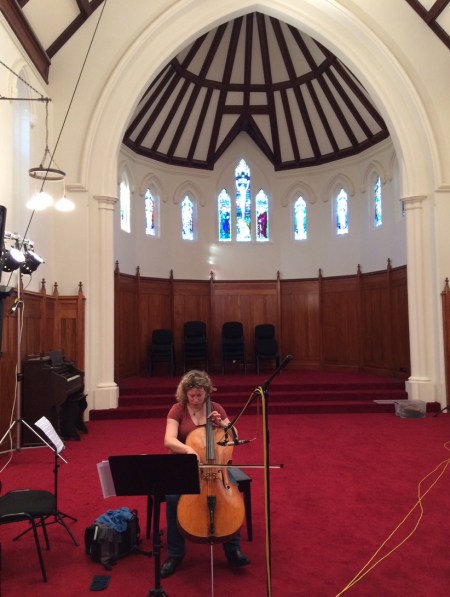
Dr. Inbal Megiddo Recording the Bach Suites at Stella Maris. Photo courtesy Inbal Megiddo.
Nature, silence, birdsong — even the Māori name of her School of Music, Te Kōkī (“the dawn chorus”) — inform her sense of connection between Bach and the earth.
The suites, she believes, ground us.
“They connect us to humanity and to the world.”
Advice for Studying the Suites
For students beginning the Bach Suites, Megiddo offers inspiring advice:
- Start with a score that has no markings.
- Decide your own phrasing.
- Breathe intentionally.
- Treat it like storytelling.
- Understand harmony, not just melody.
- Explore full dynamic range.
- Let the cello resonate naturally.
And perhaps most importantly:
Don’t copy anyone else.
Baroque Bows, Modern Instruments, and Experimentation
Megiddo encourages experimentation — baroque bows, gut strings, even alternative instruments — while choosing to record on a modern cello.
“It’s all part of trying to find your own voice.”
The music is resilient enough to survive interpretation. It thrives on it.
Pandemic Porch Concerts
During the pandemic, when musicians sought new ways to communicate, Megiddo and her husband performed weekly porch concerts for their neighbors. They performed works by many composers, including: “some Rossini and Bach.”
The Prelude to the first suite became a kind of global anthem of resilience.
And we are not tired of it — because each performance reveals something new.
What’s Next
Megiddo is currently expanding her doctoral research on Aldo Parisot into a book exploring creativity and pedagogy.
She also has two albums forthcoming:
- Forbidden Voices — music by composers suppressed during the Holocaust, including world premieres.
- A Schumann album featuring works by both Robert and Clara Schumann, including new arrangements and premieres.
Both projects continue her commitment to amplifying underrepresented voices.
“Nothing Is Sacred”
In some final advice to students, Megiddo offered something bold:
“Nothing is sacred. The way we make discoveries is by taking risks. Question everything.”
That spirit — of freedom within structure, respect without rigidity — lies at the heart of her Bach recording.
And perhaps at the heart of the cello suites themselves.
Bach: Complete Cello Suites
If you haven’t yet listened to Inbal Megiddo’s recording of the Bach Suites, I encourage you to explore it — preferably more than once.
The music may not change.
But you will.
- Listen on YouTube
- Purchase on Amazon
- Purchase at Presto Music
🔗 From This Episode
🎻 Dr. Inbal Megiddo
- Official website
- Instagram: @inbalmegiddo
🌅 Te Kōkī — “The Dawn Chorus”
Learn more about the Māori name for the New Zealand School of Music: Te Kōkī.
“Traditionally, Māori musicians listened daily to te kōkī, drawing inspiration from its cadences, melodies, harmonies and rhythms.”
🎻 Bach Sarabande (Suite No. 6) — Yale Cellos conducted by Aldo Parisot
As mentioned by Megiddo in the podcast:
🦜 The Flightless Parrot (Kākāpō)
A glimpse of New Zealand’s remarkable birdlife mentioned by Megiddo in the podcast:
☕ Cello Museum Mugs
And if you spotted the matching Cello Museum mugs both of us have in the video — yes, they’re real.
You can find them here.

📌 Subscribe
The Cello Museum Podcast is available on major listening platforms.
Subscribe wherever you listen to podcasts, and visit cellomuseum.org/podcast for episode updates and show notes.
Want our occasional newsletter? Sign up here.
Some links on this page are affiliate links. Please see the footer for more information. Thank you for your support.


